
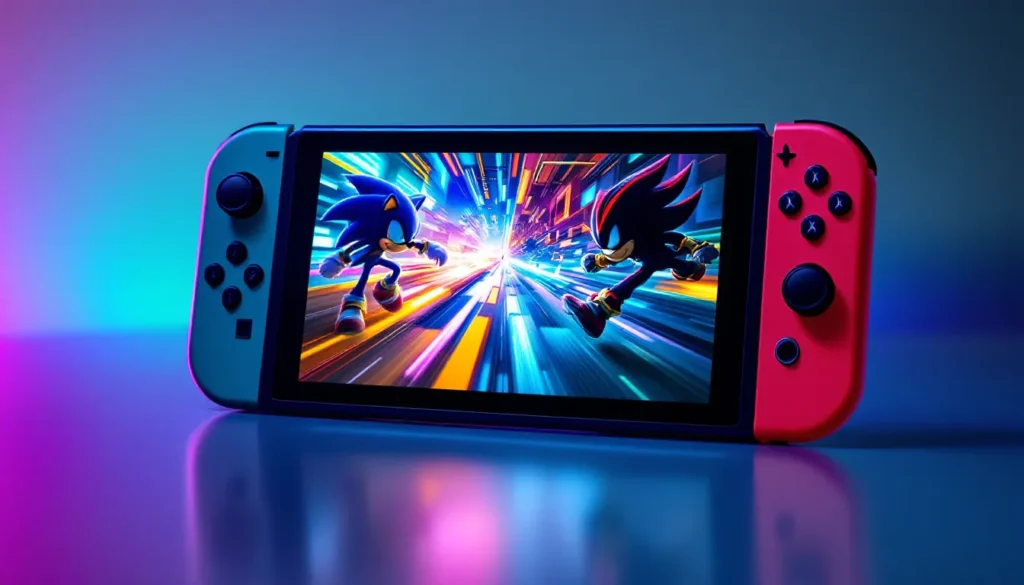
Sonic X Shadow Generations arrived on Nintendo Switch with a lot of buzz, and for good reason. This dual-protagonist adventure merges the high-speed thrills fans expect from a mainline Sonic title with Shadow’s darker, more combat-focused playstyle, all squeezed into a portable package. Whether you’re a die-hard series veteran or jumping in for the first time, the Switch version offers an accessible entry point, though there are some trade-offs worth understanding before you commit. We’re diving deep into everything you need to know to make the most of this release on Nintendo’s hybrid console.
Key Takeaways
- Sonic X Shadow Generations on Nintendo Switch delivers two distinct campaigns with Sonic’s speed-focused gameplay and Shadow’s combat-heavy mechanics, offering 30-60+ hours of content depending on completionist goals.
- The Switch version maintains 60 FPS gameplay performance at 1080p docked and 720p handheld, with noticeable but non-game-breaking visual trade-offs compared to PS5/Xbox Series X|S versions.
- Portability is the Nintendo Switch’s defining advantage, allowing meaningful progression through both campaigns during commutes or handheld play without compromising core gameplay experience.
- Load times range from 30-45 seconds at boot to 8-12 seconds between levels, which is acceptable for Switch but noticeably longer than current-generation consoles during extended replay sessions.
- Choose the Switch version if handheld gaming is your priority; opt for PS5/Xbox Series X|S if visual quality and flawless frame consistency are paramount, though neither choice is objectively wrong.
- The game requires 13 GB of storage and includes substantial single-player content without cross-save support across platforms, making it a complete conversion rather than a lazy port.
What You Need To Know About Sonic X Shadow Generations
Game Overview And Setting
Sonic X Shadow Generations is a celebration of Sonic’s legacy wrapped in a fresh, substantial package. The game serves as a spiritual successor to previous anniversary titles, but this time it’s anchored by two playable campaigns: one following Sonic’s journey and another diving into Shadow’s story. Rather than padding the experience with mere remakes, developer Sonic Team crafted new levels, mechanics, and narrative threads that feel integral to each character’s arc.
The setting bounces between Sonic’s familiar colorful worlds and Shadow’s grittier environments, each with distinct visual identities. Sonic’s levels embrace vibrant pastels and smooth curves, while Shadow’s stages lean into industrial aesthetics and darker color palettes. This duality isn’t just cosmetic, it fundamentally shapes how each campaign plays and feels.
The narrative weaves together the two stories in a way that respects both characters’ histories without requiring encyclopedic knowledge of the franchise. Longtime fans will catch deeper references, but newcomers won’t feel lost. The pacing between action-heavy segments and story beats keeps momentum steady across both campaigns.
Key Features And Gameplay Mechanics
Sonic X Shadow Generations introduces several mechanics that deserve specific attention. Sonic’s campaign emphasizes speed, momentum-based platforming, and classic loop-de-loops, with a Cyber Space concept that strips sections down to core level design. These stages prioritize flow and skill expression over spectacle.
Shadow’s campaign puts combat front and center. His Chaos Powers (Chaos Control, Chaos Spear, Chaos Blast) are essential tools, not afterthoughts. Combat encounters require actual strategy, mashing buttons won’t cut it. The Air Trick system lets you perform mid-air maneuvers for quick dodges and positioning, which is critical during faster enemy rushes.
Both characters can unlock new abilities and power-ups throughout their campaigns. Sonic gains access to new speed techniques, while Shadow unlocks enhanced Chaos Power variants that deal more damage or affect larger areas. These aren’t just cosmetic, they change how you approach familiar level layouts on replays.
The game includes a boss rush mode for both characters, challenge acts that remix existing levels with specific objectives, and collectible hunting that rewards exploration. It’s substantial content, not just padding. Players looking for depth will find it.
Nintendo Switch Performance And Technical Specifications
Graphics And Frame Rate On Switch
Let’s be direct: the Switch version of Sonic X Shadow Generations runs at 1080p docked and 720p handheld, targeting 60 FPS during gameplay. Sonic Team prioritized frame rate consistency, which was the right call for a character whose entire identity revolves around momentum and precision. Frame drops do occur during cutscenes or particularly dense visual moments, but in-level performance holds steady in most cases.
Visually, the game uses a cel-shaded art direction that translates well to Switch hardware. Rather than chasing raw polygon count, the stylized approach keeps things crisp even when resolution dips handheld. Texture work is clean, and lighting effects, particularly important in Shadow’s darker environments, maintain visual impact without tanking performance.
There are noticeable differences compared to PS5 or Xbox Series X
|
S versions: reduced foliage density in outdoor sections, slightly lower shadow resolution, and fewer particle effects during combat or speed sections. If you’re coming from other platforms, the step down is apparent. That said, the Switch version doesn’t feel compromised in ways that hurt playability. These are fidelity cuts, not feature cuts.
One quirk worth mentioning: some advanced graphical options (motion blur, depth-of-field effects) can’t be toggled independently on Switch, unlike the other platforms. You get a single visual preset, and that’s it. It’s not a dealbreaker, but it’s worth noting if you’re sensitive to those effects.
Storage Requirements And Load Times
Sonic X Shadow Generations requires approximately 13 GB of internal storage or SD card space on Switch. This puts it in the middle range for modern Switch releases, substantial, but not on the scale of something like Doom Eternal or The Witcher 3. You’ll absolutely need an SD card unless you’re deleting other games, but a standard 128GB card handles it with room to spare.
Load times sit around 30-45 seconds from boot to main menu and roughly 8-12 seconds when transitioning between levels. These are acceptable for Switch, though noticeably longer than current-generation console versions. Handheld mode has slightly longer load times than docked, adding about 2-4 extra seconds. It’s not egregious, but you’ll notice it if you’re replaying levels frequently.
Installing game updates is straightforward. There’s a day-one patch (v1.01) that optimizes performance and fixes some minor bugs. After that patch, the game is stable. No game-breaking crashes or severe performance regression has been reported post-patch in the weeks since launch. The Switch version has proven solid from a stability standpoint.
One practical note: if you’re playing handheld extensively, file a mental note that longer load times drain battery slightly faster during level transitions. Docked play is more efficient if you’re doing extended grinding sessions. Not a massive difference, but worth factoring in for longer play sessions.
Playing Sonic X Shadow Generations: Tips And Strategies
Essential Controls And Movement Techniques
The control scheme on Switch differs slightly from other platforms due to button layout. Here’s the critical mapping:
- ZR/ZL: Dash/Accelerate (context-dependent by character)
- Y/X: Jump/Double Jump
- B: Chaos Powers or Sonic’s special move
- R: Lock-on or targeting (Shadow campaigns)
- Stick flicks: Direction changes and momentum shifts
Mastering momentum management is essential for Sonic’s campaign. You can’t treat it like a traditional 3D platformer where stopping and starting is free. Building speed, timing jumps, and using level geometry to chain tricks requires practice. The first few levels teach these mechanics progressively, don’t skip the early stages even if you’re a veteran.
Shadow’s movement is more deliberate. His jetpack (accessible via Air Tricks) gives vertical mobility, but it’s not a crutch. Bosses punish spamming it. Instead, learn the dodge timing. Most boss attacks have a brief window after launch where dodging nets you invincibility frames and an opportunity to counter.
One underrated technique: holding ZR while in the air during Sonic levels extends glides or maintains momentum in ways jumping alone can’t. New players often jump repeatedly instead, killing their run entirely. Practice gliding across gaps. It saves countless deaths.
Handheld play requires slightly different thumb positioning than docked mode. The smaller stick spacing means accidentally pressing L3 or R3 during intense sections is more likely. Consider a Pro Controller or third-party ergonomic grip if you’re doing extended handheld sessions. Your hands will thank you.
Mastering Combat And Special Abilities
Shadow’s combat system requires deliberate engagement. Unlike Sonic’s speed-focused gameplay, Shadow needs proper ability rotation. Here’s the framework:
Chaos Powers hierarchy:
- Chaos Spear (basic): Fast, multi-hit, low cooldown. Your bread-and-butter attack for chip damage and crowd control.
- Chaos Blast (mid-tier): Area-of-effect explosion. Excellent for cluster enemies. Cooldown is moderate.
- Chaos Control (advanced): Time manipulation. Invincibility frames plus positioning advantage. Highest cooldown, use it strategically in boss fights.
Early on, you’ll only have Chaos Spear. Don’t feel limited. Master hit timing and dodging first. Mashing buttons against anything tougher than regular enemies gets you killed. Speed runners and challenge-mode completionists will optimize ability chains, but casual players benefit from learning enemy patterns instead.
Boss strategies:
Every boss has a tell. Watch the first phase to identify attack windows. Chaos Control isn’t an “I win” button, it’s a repositioning tool. Use it to close gaps, dodge incoming attacks you can’t escape normally, or build breathing room if pressure is overwhelming.
Combo building rewards patience. String together hits on stunned enemies without getting greedy. A solid 4-5 hit combo followed by a dodge beats a failed 10-hit attempt every time. Damage is secondary to survival.
For Sonic’s speed sections, the skill floor is high but the ceiling is massive. Time your boosts. Avoid side-to-side drifting until you understand momentum physics. If you’re struggling with a specific section, replay it 5-10 times until muscle memory sets in. Sonic games reward practice more than most action games.
One specific tip worth highlighting: Practice the lock-on feature during Sonic levels. Even though being Sonic’s game, lock-on sections appear frequently, and Shadow is far more lock-on dependent. Getting comfortable with it early prevents frustration later.
Unlockables, Achievements, And Collectibles
How To Obtain All Collectibles
Sonic X Shadow Generations includes multiple collectible categories, each with its own progression path. Understanding the structure upfront saves hours of directionless searching.
Chaos Emeralds are the main collectible. Each campaign features 7 Chaos Emeralds hidden across levels. Finding all 7 unlocks Super Sonic and Super Shadow forms, which aren’t just visual, they change gameplay significantly. Super Sonic is faster with enhanced momentum curves. Super Shadow gains additional Chaos Power charges and invincibility periods.
Chaos Emeralds aren’t gated behind impossible challenges. They’re just hidden, often tucked in optional areas that encourage exploration. A few are legitimately tricky to reach, but none require frame-perfect execution to obtain. If you’re struggling on one, it’s usually worth consulting a guide rather than brute-forcing it.
Challenge Coins appear in specific levels. These unlock cosmetic skins and sound packs. They’re optional, but completionists will want them. The locations are randomized per playthrough on higher difficulties, so find them once and you’ll know the spawns for future runs.
Memory Shards appear during replays of previous-generation Sonic levels included in the package. These are pure nostalgia items, they unlock retro artwork and sound tracks from classic games. Hunting them is more about celebration than progression.
Red Rings (Sonic) and Chaos Crystals (Shadow) are scattered throughout levels and require specific abilities or paths to access. Red Rings typically demand exploration off the critical path. Chaos Crystals often hide in combat arenas you’d normally bypass. These take longest to 100%, but there’s no artificial gating, just patience.
The collectible tracker in the level select menu shows rough percentages per stage. Use it to target remaining items efficiently. Randomly combing stages is inefficient: the tracker does heavy lifting.
Trophy And Achievement Hunting Guide
Sonic X Shadow Generations uses standard platform achievement systems. On Switch, these are called Achievements (no platinum trophy equivalent). The list is balanced, some are story-gated (automatic on completion), others require specific playstyle choices.
Story-based Achievements unlock naturally:
- Complete Sonic’s Campaign
- Complete Shadow’s Campaign
- Defeat all boss encounters
- Reach the true ending (both campaigns)
These are inevitable if you play through the games. No special requirements.
Skill-based Achievements demand precision:
- “Speedrunner”: Finish a full campaign stage under a specific time. Times are tight but achievable with practice. Not 1% territory, but you’ll need solid fundamentals.
- “No Damage”: Complete a full level without taking hits. Shadow mode is particularly punishing here. This one takes repetition.
- “Chaos Master”: Land 50+ hits in a single Shadow combat encounter. Possible but demands aggressive play without being reckless.
Exploration-based Achievements:
- “Collector”: Find all Chaos Emeralds (both campaigns). This is the centerpiece achievement. Expect 30-40 minutes per campaign if hunting methodically.
- “Ring Master”: Gather 500+ Rings across your playtime. This tracks cumulatively, so it’s impossible to miss if you play substantially.
Miscellaneous Achievements:
- “Trick Master”: Perform 20+ Air Tricks in a single level. Easy if you just play normally, unintentional.
- “Power User”: Use each Chaos Power type 10 times. Natural if you experiment during campaign.
Total achievement hunting takes 50-80 hours depending on skill level and whether you care about time attacks. Completionists will need longer: casual players might never chase them. The achievement list respects player time, nothing requires absurd dedication.
One strategy: tackle story and exploration achievements during your first playthrough, then circle back for time-attack and no-damage achievements once you’re familiar with level layouts. Learning and optimization shouldn’t run simultaneously if you want to preserve sanity.
Comparison: Switch Version Versus Other Platforms
Comparing Sonic X Shadow Generations across platforms requires honesty about what Switch excels at and where it concedes ground.
Performance trade-offs are the elephant in the room. PS5 and Xbox Series X
|
S versions run at 4K 60 FPS with no compromises. PC versions unlock higher frame rates entirely (up to 120+ FPS if hardware supports it). Switch targets 60 FPS but hits it less consistently, particularly in Shadow’s more dense levels. If frame stability is your priority, current-generation consoles are objectively superior. That’s not opinion: that’s specs.
But, portability is Switch’s unique selling point and it’s not trivial. Playing through both campaigns in bed, on commutes, or during travel has genuine value. Other platforms can’t do that. If you’re comparing convenience and flexibility, Switch wins decisively.
Visual fidelity differences matter if you sit close to a screen. Docked at 1080p, the game holds up admirably. Handheld at 720p, it’s respectable but noticeably softer. PC with high-end hardware looks objectively sharper and handles advanced lighting better. PS5/Xbox Series X
|
S split the difference, more detailed than Switch, less demanding than high-end PC. None of these are “bad,” just different.
Load times tip toward current-generation consoles. Switch’s 30-45 second boot and 8-12 second level transitions aren’t dreadful, but PS5/Xbox Series X
|
S load nearly instantly. PC matches or beats consoles depending on drive type. If you’re replaying levels for achievements, the aggregate time adds up. We’re talking hours across a full playthrough.
Price is a legitimate factor. Sonic X Shadow Generations typically costs the same across platforms ($50-60 USD), but you already own a Switch. A PS5 or Xbox requires separate hardware investment. For budget-conscious players, Switch is the pragmatic choice even though technical concessions.
Game stability is equivalent across platforms post-patch. The Switch version doesn’t crash more than other releases. It’s as stable as the PS5 version, which is to say: very stable. This isn’t where Switch stumbles.
The practical answer: if portability matters or you’re primarily a handheld player, Switch version is legitimate. If you demand absolute best visuals and performance, current-generation consoles edge it out. If you have a high-end PC, that’s marginally sharper and faster. But none of these differences are so severe that one version is “wrong.” Pick based on where you primarily game.
Sonic X Shadow Generations For Nintendo Switch Worth It?
Pros And Cons Of The Switch Release
The case for picking it up:
You get two substantial campaigns (15-20 hours each for story, 30+ for completionists), each with distinct gameplay identity. Sonic’s campaign scratches the speed-run itch: Shadow’s delivers combat substance. The package respects player time, no bloat, no artificial padding. Both stories are genuinely engaging without requiring deep franchise knowledge.
Portability is honestly the killer feature for many players. Handheld Sonic genuinely works. The controls map cleanly to Joy-Cons. Battery drain is reasonable during normal play. You can meaningfully progress during coffee breaks or commutes. This isn’t a compromise, it’s an advantage Switch uniquely offers.
The price point sits at $50-60, reasonable for the content volume. You’re not overpaying for a Switch version unlike some half-baked ports. This is a complete, intentional conversion.
If you’ve felt the itch to replay classic Sonic levels but want modern gameplay, the Cyber Space stages (remixed classic levels) hit that nostalgia sweet spot. Longtime fans get genuine value here.
The legitimate drawbacks:
Performance isn’t parity with PS5/Xbox Series X
|
S. If smooth gameplay is your main concern and you have access to those platforms, they’re technically superior. Frame rate consistency matters more in Sonic games than most genre, and Switch doesn’t maintain 60 FPS perfectly.
Visuals take a hit, particularly handheld. Softer textures, reduced particle density, and lower shadow resolution. It’s not ugly, but it’s noticeably less polished than flagship console versions. Not a dealbreaker, but worth acknowledging if visual presentation matters to you.
Load times are genuinely longer. Expect patience if you’re grinding through levels repeatedly for time-attack achievements.
If you have existing progress on other platforms, there’s no cross-save support. You’re starting fresh on Switch.
Is It The Best Version For You?
Honest answer: it depends on your priorities and existing hardware.
Pick Switch if:
- You primarily game handheld or want that option frequently.
- You’re already deep in the Nintendo Switch ecosystem.
- Portability genuinely appeals to you enough to forgive technical concessions.
- You value accessibility and don’t obsess over frame-perfect performance.
Consider another platform if:
- You have a PS5, Xbox Series X
|
S, or high-end PC and visual quality/performance is paramount.
- You’re doing serious achievement hunting and load time matters (cumulative hours across hundreds of level replays).
- You play primarily docked on a large TV and want the absolute best presentation.
The Switch version isn’t a compromise, it’s a different choice with legitimate pros and cons. Call of Duty and other complex multiplayer titles suffer on Switch due to complexity. Sonic X Shadow Generations, with its single-player focus and lower systemic overhead, translates smoothly. It’s not the “best” version objectively, but it might be the best version for you specifically.
If you’re genuinely torn, consider your gameplay habits over the next year. If you’re likely to play handheld for 60%+ of your gaming time, Switch wins. If you’re docked on a big screen 80%+ of the time, current-gen consoles or PC are smarter investments. That’s the real metric.
One additional thought worth exploring: if you want to experience COD on Nintendo Switch, the Switch library has come a long way in handling ports. Sonic X Shadow Generations is actually a solid example of intentional, quality porting rather than lazy conversion. That said, it’s still worth comparing version quality if you’re willing to invest.
Conclusion
Sonic X Shadow Generations on Nintendo Switch delivers exactly what it promises: two meaty campaigns with distinct gameplay identities, squeezed onto portable hardware without gutting the experience. The technical compromises are real but not game-breaking. Performance holds steady at 60 FPS for gameplay, visuals remain crisp even though lower resolution handheld, and load times, while noticeably longer than other platforms, don’t derail the experience.
The question isn’t whether Switch is objectively the best version, it isn’t. PS5 and Xbox Series X
|
S have cleaner performance and superior visuals. High-end PCs unlock even higher frame rates. But “best” assumes everyone games the same way, which isn’t true. If you value portability, if you game primarily handheld, or if you want to play Sonic and Shadow’s stories anywhere you want, Switch is genuinely the right choice even though the technical trade-offs.
Content-wise, you’re looking at 30-40 hours minimum for both story modes, easily 60+ if you hunt collectibles and achievements. That’s substantial value. Neither campaign feels like padding or afterthought, they’re both full experiences designed for their respective characters.
If you already own a Switch and want a meaty action-adventure title, Sonic X Shadow Generations is worth your time and money. If you’re deciding between platforms, your choice depends on what matters more: absolute technical performance or gaming flexibility and portability. Neither answer is wrong: they just reflect different priorities. Make the choice aligned with how you actually game, not how some hypothetical “optimal” gamer might play, and you’ll be satisfied.