
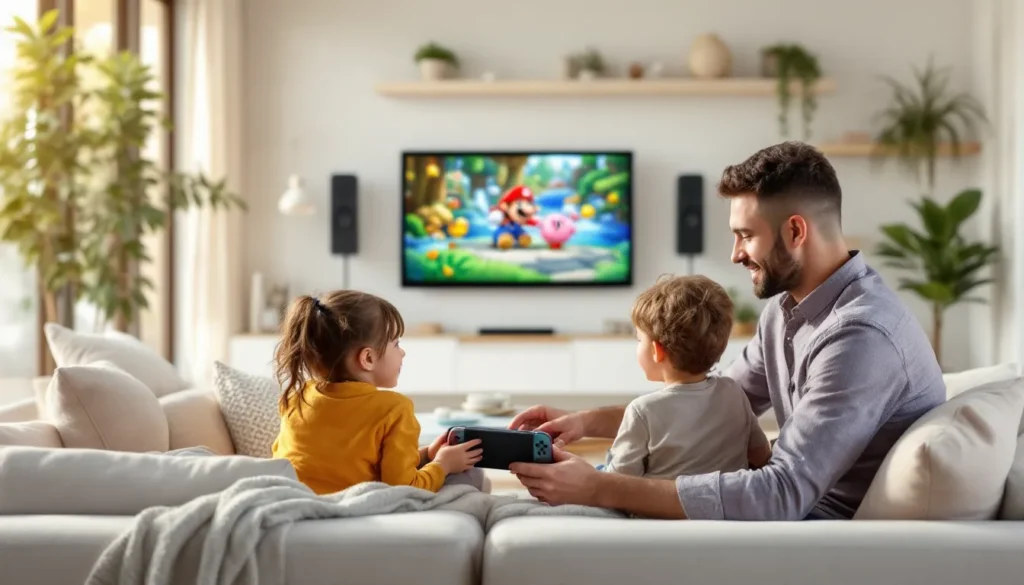
Finding the right Nintendo Switch game for your kid can feel like navigating a massive digital storefront with thousands of titles. You want something entertaining, age-appropriate, and engaging enough that they’ll actually play it, not just let it collect dust on the shelf. The good news? The Switch has an incredible library of genuinely excellent games designed with kids in mind, from wholesome adventures to brain-teasing puzzles and cooperative multiplayer experiences that the whole family can enjoy together. Whether your child is five or fifteen, there’s something here that’ll keep them entertained while giving you peace of mind about what they’re playing.
Key Takeaways
- The Nintendo Switch library includes hundreds of excellent games designed specifically for kids, from educational titles like Animal Crossing and Mario + Rabbids to exploration adventures like Zelda: Breath of the Wild that reward curiosity and problem-solving.
- Best Nintendo Switch games for kids combine engaging gameplay with age-appropriate content—use ESRB ratings (E, E10+, T, M) and parental controls to ensure games match your child’s developmental level and values.
- Multiplayer experiences like Mario Kart 8 Deluxe, Overcooked 2, and Mario Party offer genuine family bonding opportunities while teaching teamwork, strategic thinking, and healthy competitive spirit without toxicity.
- Nintendo’s robust parental controls allow you to set time limits, restrict online features by ESRB rating, monitor activity, and control social interactions—giving parents confidence in what their children access.
- Healthy gaming habits require clear time boundaries (1–2 hours daily for school-age kids), regular movement breaks, occasional co-play with your child, and monitoring online safety rather than spying on activity.
- Engagement with a compelling game is normal and healthy for kids; watch for true warning signs of addiction like declining grades, social withdrawal, or mood swings rather than assuming enthusiasm for quality games is problematic.
Why Nintendo Switch Is The Perfect Gaming Console For Children
The Nintendo Switch stands out as one of the best platforms for kids because it was designed with family gaming in mind from day one. Unlike its competitors that pushed hardcore gaming and online multiplayer intensity, Nintendo built the Switch around accessibility and fun first. The hardware itself is also inherently kid-friendly, the controllers detach and reattach easily, games support local co-op without requiring multiple consoles, and the library skews heavily toward colorful, creative experiences rather than violent shooters.
Parental controls on the Switch are legitimately robust. You can set time limits, restrict online features, control what content your child can access based on ESRB ratings, and even monitor their activity. The console’s portability also means kids can play handheld, at home on the TV, or in tabletop mode, flexibility that keeps them engaged in different settings. Beyond the technical side, Nintendo’s first-party titles (games developed by Nintendo themselves) maintain a consistent quality bar and family-friendly approach that parents trust. When you buy a Mario, Zelda, or Animal Crossing game, you know what you’re getting: polish, creativity, and age-appropriate fun.
Top Educational Games That Make Learning Fun
Mario + Rabbids Sparks of Hope ($50, rated E10+) blends turn-based strategy with puzzle-solving in a way that feels more like play than assignments. Kids develop tactical thinking, planning moves several turns ahead, while solving environmental puzzles. The game respects their intelligence without being punishing.
Puyo Puyo Tetris 2 ($30, rated E) teaches pattern recognition and quick decision-making through block-dropping gameplay. It’s deceptively deep for competitive players but accessible for kids learning the genre. Multiple game modes keep it fresh.
New Super Mario Bros. U Deluxe ($60, rated E) isn’t just educational in a “learning” sense, it teaches spatial reasoning, timing, and problem-solving through platforming challenges that escalate gradually. The difficulty curve respects younger players while offering genuine challenges for older siblings.
Just Dance 2024 ($50, rated T) combines physical movement with music recognition. Kids are literally learning rhythm and coordination while having a blast. The song library includes tracks they actually enjoy, not just stale kid versions.
Animal Crossing: New Horizons ($60, rated E) teaches resource management, time concepts, and creative decision-making through island customization. Kids learn to plan, budget resources, and express creativity without any fail states or stress.
Nintendo Switch Sports (free + $50 for Ring Fit Adventure) teaches sports fundamentals through motion controls. The activity aspect makes it genuinely educational for physical literacy, and Ring Fit Adventure specifically teaches exercise form and discipline in a fun RPG wrapper.
Best Adventure And Exploration Games For Kids
The Legend of Zelda: Breath of the Wild ($70, rated E10+) remains the gold standard for exploration games. The world feels massive and alive, kids can tackle challenges in any order, and failure is just part of exploration, not a game over. The sense of discovery stays fresh throughout. This is one of the best Nintendo Switch games for kids because it rewards curiosity and experimentation.
The Legend of Zelda: Tears of the Kingdom ($70, rated E10+) doubles down on that philosophy with even more creative tools for problem-solving. Kids build solutions to puzzles, and there’s no single “right answer.” The expansion pack DLC is optional, the base game is massive enough.
Super Mario Odyssey ($60, rated E) is pure joy wrapped in creative level design. Mario’s possession ability (Cappy) opens up exploration that feels genuinely inventive. Kids will find hidden areas and secrets for hours.
Pikmin 4 ($60, rated E10+) turns exploration into strategy. Kids lead tiny plant creatures through colorful alien worlds, solving environmental puzzles. The campaign is around 15-20 hours with genuine replay value through different approaches.
Captain Toad: Treasure Tracker ($40, rated E) focuses entirely on exploration and puzzle-solving without combat. Each level is a small 3D diorama to explore from multiple angles. It’s short (8-10 hours) but perfectly paced for younger kids.
Spiritfarer ($20, rated T) is a gorgeous hand-drawn adventure about emotional growth wrapped in exploration and resource management. The story isn’t heavy-handed but genuinely moving. Kids get a game that respects their intelligence.
Family-Friendly Action And Platformer Games
Super Mario Bros. Wonder ($60, rated E) is the latest 2D Mario and it’s absolutely brilliant. The elephant powerup, flower transformations, and level variety keep each world feeling fresh. Difficulty options mean both young kids and experienced players find their groove.
Kirby and the Forgotten Land ($60, rated E) gives Kirby full 3D exploration with his copy ability as the core mechanic. The level design is smart, challenges scale based on which ability you’re using. Easily 20+ hours of content with optional challenges.
Donkey Kong Country Returns: Tropical Freeze ($50, rated E10+) is genuinely challenging but fair. The jungle mine-cart sequences feel hectic but kids master them through repetition. Co-op mode is actually enjoyable together without turning into a blame game.
Luigi’s Mansion 3 ($60, rated E10+) mixes action with puzzle-solving through a ghost-filled mansion. The Luigi Mansion franchise has always been underrated, this one delivers atmosphere and fun mechanics that click with kids immediately. Ghost-sucking with motion controls feels intuitive.
Rayman Legends: Definitive Edition ($20-40, rated E10+) is a port of a PS Vita/PS3 title but it shines on Switch. The level design is phenomenal, colorful, creative, and challenging without being unfair. Musical levels are a highlight.
Yooka-Laylee and the Impossible Lair ($20, rated E10+) is a spiritual successor to Donkey Kong Country with indie charm. Each world can be tackled as a traditional platformer or as maze-like exploration. The game respects player choice.
Party And Multiplayer Games For Group Fun
Mario Kart 8 Deluxe ($60, rated E) is the definitive local multiplayer racer. Four players split-screen, battle modes, diverse track design, it hasn’t aged even though being ported from the Wii U. When family game night happens, this is usually first pick. The best Nintendo Switch games for kids almost always include Mario Kart.
Super Smash Bros. Ultimate ($60, rated T) is a 1-on-1 fighter with 89 characters. Even non-competitive kids enjoy the chaos. The adventure mode (World of Light) works solo too, 40+ hours of single-player content alongside multiplayer insanity.
Mario Party Superstars ($60, rated E10+) resurrects older Mario Party boards that actually work rather than gimmicky newer entries. Local multiplayer chaos ensues. It’s the definition of fun-not-fair gameplay.
Overcooked. 2 ($15-20, rated E) is cooperative cooking chaos. One to four players work together in increasingly absurd kitchens. Communication and teamwork matter, kids actually bond while playing this.
Super Mario Party ($60, rated E10+) offers minigames galore alongside the party mode. Each character has unique dice mechanics that actually matter. More accessible than Superstars for younger kids.
Nintendo Switch Sports (free base game) includes bowling, tennis, badminton, and soccer through motion controls. Ring Fit Adventure ($50) adds fitness RPG elements. Both scale from kids to adults, no gatekeeping on skill levels.
Creative And Puzzle Games To Boost Problem-Solving Skills
Picross S Series (multiple entries, $8-10 each, rated E) teaches logic through nonogram puzzles. Kids solve pixel-art pictures by interpreting number clues. It’s meditative without being boring, hundreds of puzzles per game.
Portal 2 ($20, rated T) is technically rated Teen but the content is essentially physics-based puzzle-solving. Kids who like thinking games find it compelling. The co-op mode is genuinely challenging and fun.
The Witness ($40, rated E) is a first-person puzzle game on an island full of line-drawing challenges. Zero dialogue, zero hand-holding, kids discover mechanics through experimentation. It’s demanding but not frustrating.
A Short Hike ($8, rated E) is a tiny adventure game about exploring a mountain. Perfect 2-3 hour experience with zero pressure. Older kids appreciate the writing and charm: younger kids enjoy the exploration.
Doki Doki Literature Club Plus ($15, rated M for mature audiences) is worth mentioning: it looks like a visual novel dating game but evolves into something darker. Parental discretion absolutely required, research this before giving it to a kid.
Lego games series (various titles, $20-40, rated E10+) including Lego Star Wars, Lego Marvel, and Lego City Undercover offer cooperative puzzle-solving and creative building. The format is familiar enough that kids jump in immediately, minimal learning curve. Hundreds of collectibles extend playtime significantly.
Sports And Racing Games For Active Play
Mario Kart 8 Deluxe already appeared in the multiplayer section, but it deserves mention here too, it’s genuinely the best racing game on the platform for kids. Learn racing lines, drift mechanics, and track memory through repetition.
F-Zero 99 (free-to-play, requires Nintendo Switch Online, rated E) launched in 2023 as a battle royale racing game. Ninety-nine racers compete simultaneously. The learning curve is steep, but competitive kids thrive here.
Ring Fit Adventure ($50, rated E10+) gamifies exercise through an RPG story where you fight enemies using real-world movements. Twenty to thirty-minute sessions teach fitness habits without making exercise feel like a chore. Parents report this actually gets kids moving.
Nintendo Switch Sports (free base game, $50 with Ring Fit) covers tennis, badminton, soccer, and bowling. The motion controls feel responsive once calibrated. Online rankings teach competitive spirit without toxicity, there’s less trash talk in motion-controlled games.
Golf Story ($15, rated E) blends RPG mechanics with golf gameplay. The story is charming, the golf mechanics teach patience, and it’s a solid 10-15 hour adventure disguised as a sports game.
Wave Race: Blue Storm ported from GameCube, racing water physics with visual spectacle. Actually a solid racing foundation that’s less crowded than Mario Kart.
How To Choose Age-Appropriate Games For Your Child
Understanding Nintendo Switch Parental Controls
The Nintendo Switch parental control system is genuinely one of the best on any console. Access it through System Settings → Parental Controls. You’ll set a PIN that only you know, kids can’t adjust restrictions without it.
Time limits are straightforward: set daily playtime (even per-game if you want), and the console locks when time expires. Alarms warn 30 minutes and 5 minutes before shutdown.
Content restrictions filter by ESRB rating. You can set the console to allow only E (Everyone), E10+, T (Teen), M (Mature), or AO (Adults Only). Anything outside that range requires your PIN to play.
Social features are crucial for online safety. You can restrict friend requests, disable online multiplayer, turn off voice/text chat, and control screenshot sharing. For younger kids, hardcore lockdown is an option.
Nintendo eShop restrictions prevent purchases without parental approval. Either require a PIN for purchases or set a monthly spending limit. Smart move: use this to teach kids about digital currency value.
Using ESRB Ratings As A Selection Guide
The ESRB (Entertainment Software Rating Board) rating system exists for a reason. Here’s what each tier means:
E (Everyone) is the safest choice for kids under 6. Think Mario, Kirby, Animal Crossing. Zero violence, bright colors, wholesome themes.
E10+ (Everyone 10+) introduces mild violence, typically cartoon-style. Most platformers, action-adventures, and family games live here. Mario, Zelda, Donkey Kong Country are all E10+.
T (Teen) includes violence, blood, mild language, or suggestive themes. Games like Splatoon 2 (fictional “ink” combat), Smash Bros (fighting), and Fortnite land here. Older kids and teens are the target audience.
M (Mature 17+) means blood, violence, strong language, sexual content, or substance use. Think Grand Theft Auto, certain Call of Duty games. Generally not appropriate for kids under 16 even if they beg.
The ESRB descriptor system adds detail beyond ratings. If a game is rated T for “Violence,” that tells you more than the rating alone. Always check descriptors at esrb.org before purchasing.
Parents sometimes worry they’re being overprotective. Reality check: the ratings exist because industry research shows developmental differences in how kids process certain content. A game rated M isn’t just “harder”, it contains content genuinely unsuitable for younger brains. Respecting those guidelines isn’t limiting your kid: it’s informed parenting.
Read reviews from reputable gaming outlets like Game Rant and Shacknews for detailed breakdowns of what your child will actually encounter. Parent guides on common gaming sites also provide scene-specific examples, crucial for kids near age boundaries.
Tips For Healthy Gaming Habits In Children
Set clear time boundaries. The Switch’s parental controls enforce daily limits, which is perfect. Communicate these with your kid, they’re not punishments, they’re structure. Most child development experts recommend 1-2 hours daily for school-age kids, though younger children benefit from less. The key is consistency.
Encourage breaks and movement. Gaming sessions shouldn’t exceed 30-60 minutes without a break. Stand up, stretch, grab water. Ring Fit Adventure and Nintendo Switch Sports actually address this, they require movement. For seated games, set a timer.
Play together sometimes. You don’t need to play every session, but periodic joint play does three things: it builds bonding, it lets you see what your kid is actually doing, and it normalizes gaming as a family activity rather than isolating screen time. Mario Kart, Overcooked, and Mario Party are specifically designed for this.
Monitor, don’t spy. There’s a difference. Parental controls let you review activity, what games they played, how long, who they communicated with online. This isn’t invasive: it’s informed oversight. Have honest conversations about what they’re playing rather than hidden monitoring.
Be aware of online features. Nintendo Switch Online (subscription required for online multiplayer) gives access to online communities. Some games have voice chat with strangers. For younger kids, disable this entirely. For older kids, explain basic internet safety: don’t share personal info, report harassment, tell a parent if something makes them uncomfortable.
Avoid gaming before bed. Blue light from screens can interfere with sleep. Stop gaming at least 30-60 minutes before bedtime. This isn’t a rule unique to Switch, it applies to all screens.
Model good habits yourself. Kids notice when parents are glued to phones while telling them gaming is “time-wasting.” If you game, maintain similar boundaries. If you don’t, at least recognize that games aren’t inherently bad, it’s balance that matters.
Know the difference between addiction and engagement. A kid who wants to play for hours isn’t necessarily addicted: they might just be engaged in a genuinely compelling experience. Watch for warning signs: declining grades, social withdrawal, intense mood swings when gaming stops, or gaming replacing sleep and meals. Those indicate actual problems worth addressing with a professional. Enthusiasm for a good game is normal and healthy.
Conclusion
The Nintendo Switch library for kids has matured into something genuinely special, it’s not just ports and spinoffs anymore. There are legitimately excellent games designed with kids in mind, from educational experiences that teach problem-solving to adventures that spark imagination. Your job as a parent isn’t to police every minute of screen time: it’s to make informed choices, understand what your kid is playing, and maintain balance.
Start with games that match your child’s age and interests. Use parental controls confidently, they exist for good reason. Play together occasionally. And remember: a kid who’s engaged in a compelling game, learning through play, and having genuine fun is doing something valuable. The games on this list represent hundreds of hours of creative work designed specifically to entertain and engage young minds.
Take advantage of the Switch’s trial system where available, watch gameplay clips on YouTube before purchasing, and don’t hesitate to reach out to other parents about what their kids enjoy. The gaming community is generally helpful when you ask genuine questions. Your kid’s about to have a lot of fun, make sure you guide that journey thoughtfully, and don’t be surprised if you find yourself wanting to play some of these games too. Many of them are just genuinely good, regardless of age. That’s the real sign of quality game design.