
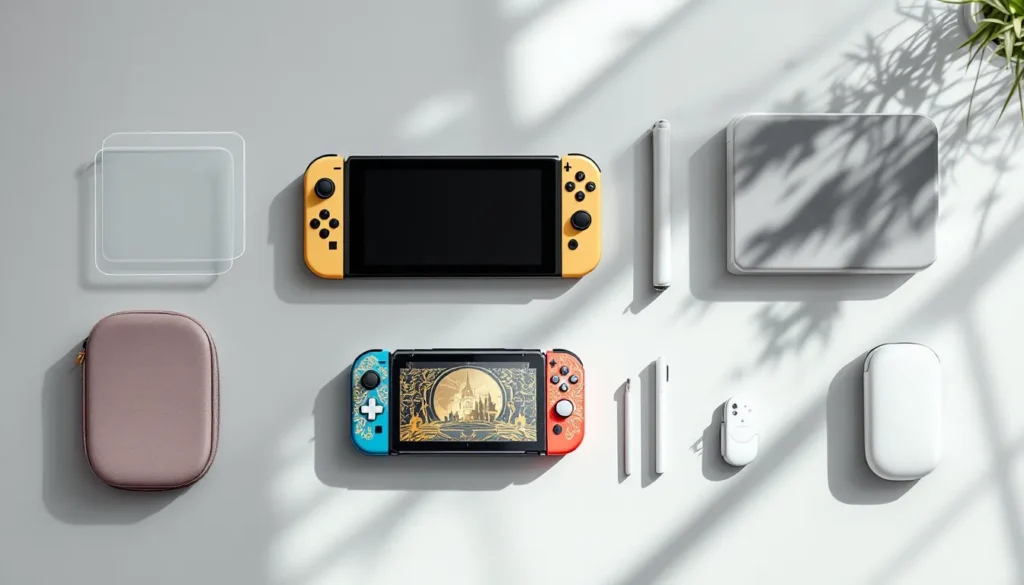
If you’re a Nintendo Switch owner, you’ve probably noticed those eye-catching special edition consoles sitting on store shelves or popping up in your gaming feeds. They’re more than just prettier versions of the standard model, they’re curated experiences that blend exclusivity, collectibility, and often, unique functionality. Whether you’re hunting for that limited-run Legend of Zelda model, eyeing a franchise-specific edition, or trying to decide if splurging on a special edition is worth it over a standard Switch, you’ve come to the right place. This guide covers everything you need to know about Nintendo Switch special editions in 2026, from what makes them stand out to where to find them and how to build a meaningful collection around them.
Key Takeaways
- Special edition Nintendo Switch consoles offer scarcity, thematic design, and strong resale value potential beyond their aesthetic appeal, making them worthwhile investments for collectors.
- Performance and technical specs remain identical between special edition and standard Switch models within the same hardware generation—the value lies purely in aesthetics and collectibility.
- Limited-run special editions with defined production windows hold value better than mass-produced variants; research production numbers before paying secondary market premiums of 20–50% above MSRP.
- Pair your special edition Nintendo Switch with games from its franchise to maximize psychological satisfaction and justify the upfront investment across 5+ years of ownership.
- Protective cases, screen protectors, and quality accessories preserve condition and maintain resale value, with pristine editions fetching 40–60% of launch price versus 20–40% for worn units.
- Secondary market hunting requires patience and price monitoring through tools like eBay’s price history; set alerts and time purchases around franchise announcements when collector attention shifts.
What Makes Special Edition Nintendo Switch Consoles Worth the Investment
Special edition Nintendo Switch consoles aren’t just cosmetic upgrades, they represent a convergence of brand storytelling, production limitations, and collector value. When Nintendo releases a special edition, it typically features custom Joy-Con designs, unique dock artwork, or both. Some editions bundle exclusive games or digital content, amplifying their appeal beyond the hardware itself.
The real value proposition comes down to three factors: scarcity, thematic cohesion, and resale potential. A standard white Switch will always be available, but a Pokémon Scarlet & Violet edition has a finite production window. Once it sells out, prices spike on the secondary market. Collectors and serious gamers recognize this, which is why special editions often hold their value better than standard models.
From a pure gameplay perspective, special editions perform identically to standard Switch models. The internal hardware, processing power, and software compatibility remain unchanged. The difference is entirely aesthetic and collectible. That said, some gamers argue the psychological boost of using a console that matches their favorite game creates genuine added enjoyment, and that’s not trivial. If owning a Zelda-themed Switch makes your gaming sessions feel more special, that’s real value.
Best Current Special Edition Models Available Today
Flagship Franchise Editions
Nintendo’s biggest franchises get the premium special edition treatment, and 2026 continues this trend. The Legend of Zelda: Tears of the Kingdom edition remains one of the most coveted models on the market, featuring gold-accented Joy-Con and a dock with iconic kingdom imagery. This edition has become harder to find at MSRP, with secondary market prices climbing significantly.
The Pokémon Scarlet & Violet special edition launched with distinct color variants, Scarlet in orange and Violet in purple. Both sold briskly and maintain strong collector interest. If you missed the initial release window, expect to pay a premium for loose units in good condition.
More recently, franchise editions have expanded beyond top-tier IPs. Mario and Donkey Country have received special treatment, though availability fluctuates by region. The key here is that flagship editions maintain consistent demand because they tap into established fanbases with deep wallets and genuine attachment to the source material.
Limited-Run Collector’s Editions
Beyond franchise flagships, Nintendo occasionally releases limited-run editions tied to specific announcements, anniversaries, or partnerships. These often include numbered packaging, certificates of authenticity, or bundled merchandise. The Animal Crossing: New Horizons special edition from 2020 remains a reference point, Nintendo’s teal and turquoise pastels proved universally appealing, and stock vanished within weeks.
The challenge with collector’s editions is predicting which ones will become genuinely scarce versus which will eventually clearance. The industry saw this play out with various sports tie-ins and third-party collaborations. Research release numbers and production intent before committing to premium pricing: some limited runs are genuinely limited, while others are just marketing language.
Nintendo’s own media outlets like Video Game Chronicle’s release tracking can help confirm production scale and projected scarcity. If production was capped at 50,000 units worldwide versus 500,000, that changes the investment calculus entirely.
Hardware Variant Special Editions
Sometimes the specialness isn’t just the paint job, it’s a hardware variant. The Nintendo Switch Lite came in special colors and bundles that felt less premium but still collectible. Later, the Nintendo Switch OLED model launched with design-forward special editions that justified the $349 price point through superior display technology combined with exclusive aesthetics.
These hardware variants matter because they’re not just cosmetic. An OLED edition performs measurably better than the original Lite, better colors, brighter whites, deeper blacks. If you’re choosing between a standard OLED and a special edition OLED, you’re getting both the collector appeal and tangible hardware improvements.
Some regions received exclusive color variants that never released globally. Japanese regional exclusives, for example, occasionally make their way to secondary markets. Tracking regional releases through outlets like Gematsu’s announcement database helps identify which editions have genuine scarcity due to geographic limitation.
Comparing Special Editions vs. Standard Switch Models
Performance and Technical Differences
Let’s be direct: the standard Switch and a special edition Switch perform identically if they’re the same hardware generation. A special edition original Switch plays games exactly as well as a standard original Switch. No frame rate difference, no processing advantage, no hidden performance multiplier.
Where technical differentiation exists is between hardware generations. The Switch OLED model has a measurably better display than the original Switch, regardless of whether it’s in special edition colors. The Lite is underpowered for handheld-only play. These differences are hardware-generation based, not special-edition based.
Some gamers worry that special editions use lower-quality Joy-Con materials or have higher drift rates. There’s no evidence supporting this. If anything, recent production batches across all variants have addressed Joy-Con drift issues more consistently than earlier models. The manufacturing standards don’t vary by aesthetic variant.
Aesthetic and Collectibility Factors
Here’s where special editions shine: they turn a utility device into a personal statement. Using a custom-themed Switch signals your gaming preferences visually. The Joy-Con colors, dock artwork, and packaging all contribute to an experience that feels tailored rather than generic.
Collectibility is the secondary but significant factor. If you’re displaying your console on a shelf or in a gaming room, a special edition with thoughtful design choices will always photograph better and feel more intentional than white or gray plastic. This matters to streamers, content creators, and dedicated collectors.
Resale value represents the final collectibility angle. A pristine, unopened special edition often appreciates. A used standard Switch depreciates faster. The gap between used special edition pricing and launch MSRP is often smaller than the depreciation curve for standard models. If you ever plan to upgrade or downsize, special editions provide a financial buffer.
That said, collectibility only matters if the edition remains relatively scarce. Mass-produced special editions that stay in stock indefinitely don’t develop collector premium. The sweet spot is editions that sold well but had defined production windows, enough appeal to create demand, constrained enough to feel exclusive.
Pricing, Availability, and Hunting Tips
Where to Find Special Edition Consoles
Traditional retailers like Best Buy, Walmart, and GameStop remain primary sources for current special editions. Online retailers including Amazon and Nintendo’s official store provide broader reach, though stock visibility fluctuates hourly. The key advantage of authorized retailers is price consistency at MSRP, typically $299 for standard models, $349 for OLED variants, and $199 for Lite versions.
For discontinued or out-of-stock editions, secondary markets become necessary. Facebook Marketplace, eBay, and dedicated gaming resale platforms like StockX (which has expanded into gaming hardware) all host special edition inventory. Prices on secondary markets typically run 20–50% above launch MSRP for moderately scarce editions, and significantly higher for genuinely rare models.
The trick to secondary market hunting is patience and price monitoring. Use eBay’s price history tools and set alerts on resale platforms. Prices fluctuate based on nostalgia cycles, franchise announcements, and seasonal buying patterns. A Zelda edition might drop in price after a new franchise announcement diverts collector attention elsewhere.
Japanese import sites like Play-Asia occasionally stock regional exclusives at competitive prices, though import duties and shipping can inflate final costs. Regional exclusivity is real, some editions released exclusively in Japan or Europe. If you’re committed to owning a specific region-locked edition, import routes might be your only option.
Nintendo’s official social channels and industry tracking through Siliconera provide advance notice of announced special editions. Following these sources gives you a chance to preorder at MSRP before secondary market premiums inflate prices.
Budget Considerations and Value Analysis
The financial question is straightforward: how much premium should you pay for the aesthetic? If you’re buying at launch for MSRP, the premium is built into the retail price, typically $20–50 above a standard model. That’s reasonable if the design resonates with you.
If you’re hunting on the secondary market, the calculus changes. A Pokémon edition fetching $450 when standard Switches retail for $299 requires genuine passion for the franchise or confidence in collectible appreciation. For casual gamers, this doesn’t make financial sense.
Value analysis depends on your gaming horizon. If you plan to play this Switch for 5+ years, the aesthetic appeal justifies the upfront cost across that timeline. If you’re upgrading to the next hardware generation in 12 months, a premium special edition is poor financial planning.
One underrated aspect: bundled special editions sometimes include games or digital content that partially offset the premium. A special edition bundling The Legend of Zelda or Mario Kart 8 Deluxe effectively reduces your true hardware cost if you were going to purchase that title anyway. Factor bundled content into your value calculation.
Building Your Special Edition Collection
Game Library Pairing Recommendations
Owning a special edition is more rewarding when you’re actively playing games that complement its aesthetic. A Zelda edition feels purposeful when you’re deep in Tears of the Kingdom. A Pokémon edition demands you’re catching and training in Pokémon Legends: Arceus or the latest mainline titles.
This isn’t about forcing yourself into specific games, it’s about maximizing the psychological satisfaction of your hardware choice. If you own a Mario edition but primarily play Doom and Diablo, there’s a disconnect. Instead, pair special editions with franchises that form the core of your play sessions.
Building a special edition collection means acquiring multiple editions tied to different franchises. One collector might own a Zelda edition, a Pokémon edition, and a Mario edition, each serving as the “primary” console for that franchise’s ecosystem. This approach requires budget commitment but creates a genuinely personalized gaming setup.
Consider acquiring editions that represent different hardware generations. An OLED Zelda edition and an original Pokémon edition offer both technical differentiation and aesthetic variety. This prevents your collection from feeling like glorified shelf decoration.
Protective Cases and Accessories
Special edition consoles deserve protection befitting their premium status. Generic black carrying cases undermine the visual appeal you paid extra for. Instead, invest in protective cases designed to showcase the console’s design. Transparent or translucent cases preserve visibility while offering drop and scratch protection.
Joy-Con protection matters separately from console protection. Quality glass screen protectors for Nintendo Switch devices prevent scratches on the display while maintaining visual clarity. This is especially important if you’re rotating between handheld and docked play modes regularly.
Dock skins or protective dock covers prevent dust accumulation without obscuring the dock’s design. Some special editions feature artwork on the dock itself, making protection essential for preserving that aesthetic. Tempered glass or soft-touch skins work well.
Accessory coordination extends to smaller items like carrying straps, thumb stick covers, and even charging dock variants. Companies like Hori produce officially licensed protective accessories that match Nintendo’s quality standards. These don’t come cheap, but they prevent damage that would cost far more in reduced resale value.
If you’re selling a Nintendo Switch later, condition matters enormously. A pristine special edition in original packaging with minimal use fetches 40–60% of launch price. Significant wear reduces value by 60–80%. Protective accessories pay for themselves through condition preservation.