
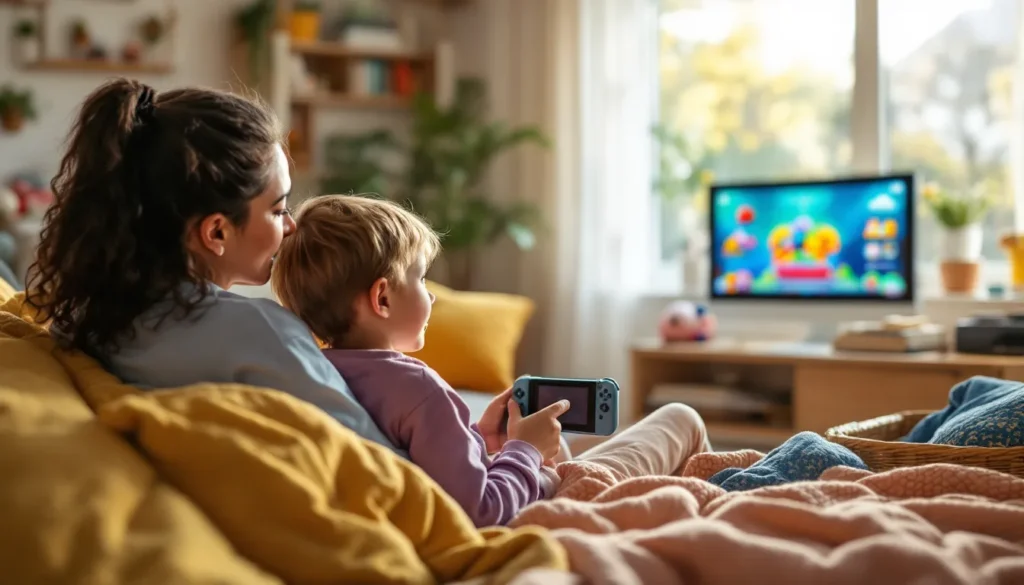
Finding the right Nintendo Switch games for 5-year-olds requires balancing entertainment, safety, and developmental value. Parents and guardians want their children engaged with games that won’t expose them to inappropriate content, while kids themselves crave fun, colorful experiences that hold their attention. The good news: the Switch library offers plenty of genuinely excellent titles designed with young children in mind. These games aren’t just time-fillers, they’re interactive experiences that build skills, spark creativity, and create memorable moments for families. This guide walks you through the best Nintendo Switch games for 5-year-olds, covering educational picks, creative experiences, and multiplayer fun that everyone can enjoy together.
Key Takeaways
- The Nintendo Switch is ideal for 5-year-olds due to its hybrid design, lightweight Joy-Con controllers, and family-friendly first-party titles that balance accessibility with engaging gameplay.
- Best Nintendo Switch games for 5 year olds should feature colorful visuals, simple controls, age-appropriate content, and forgiving difficulty that doesn’t frustrate young players.
- Educational titles like Puyo Puyo Tetris, Brain Training, and Numberblocks develop math and problem-solving skills through engaging play without feeling like structured learning.
- Multiplayer games such as Mario Kart 8 Deluxe, Kirby’s Return to Dream Land Deluxe, and Nintendo Switch Sports strengthen family bonds by allowing mixed skill levels to play together.
- Parental controls including ESRB rating restrictions, daily playtime limits, and online communication toggles enable safe gaming, while screen time should follow pediatric guidelines of no more than one hour daily for children under 6.
- Creative and adventure games like Animal Crossing: New Horizons, Super Mario Odyssey, and The Legend of Zelda: Link’s Awakening inspire imagination and exploration without high-stakes failure mechanics.
Why Nintendo Switch Is Ideal For Young Children
The Nintendo Switch stands out as one of the best platforms for young children, and it’s not just marketing hype. The hybrid design, playable as a home console, tabletop device, or portable handheld, means kids can game anywhere, whether that’s the living room or a long car ride. The Joy-Con controllers are smaller and lighter than traditional gamepads, making them genuinely comfortable for small hands. Accessibility matters too: most Switch games scale difficulty dynamically or offer adjustable settings, so a 5-year-old isn’t fighting unfair challenges.
Nintendo’s own first-party titles consistently prioritize family-friendly design without dumbing things down. Games like Mario, Zelda, and Kirby franchises have been refined over decades to hit that sweet spot of being approachable yet engaging. The eShop filtering system helps parents find age-appropriate titles, and parental controls are robust enough to prevent accidental purchases or exposure to mature content. Plus, the Switch’s battery life (4.5–9 hours depending on model) and durable build quality mean it can actually survive a young child’s hands-on enthusiasm.
What Makes A Game Suitable For Preschoolers
Not every game labeled “E for Everyone” is actually right for a 5-year-old. Understanding what makes a title suitable goes beyond ESRB ratings. A few key factors matter: whether the game respects short attention spans, how forgiving it is of mistakes, and whether failure feels frustrating or like a natural part of play.
Colorful Visuals And Engaging Gameplay
Young children respond powerfully to bright, distinct colors and clear art styles. Games with cartoonish or vibrant aesthetics naturally appeal more than realistic graphics, which can occasionally veer toward creepy or disturbing. Gameplay should feel responsive and rewarding, actions that lead to immediate visual or audio feedback keep 5-year-olds invested. Games like Super Mario Odyssey and Kirby’s Return to Dream Land Deluxe excel here: every jump, every power-up, every collected item triggers satisfying visual or sound effects.
Simple controls are essential. A 5-year-old doesn’t need complex button combinations. Games that let you succeed by pressing a few buttons or using motion controls feel intuitive and empowering rather than frustrating.
Age-Appropriate Content And Safety Features
Content maturity is paramount. Look for games with no violence, no dark themes, and no scary imagery. Even “mild” violence in some games (cartoon-style combat with minor damage indicators) can be too much for sensitive kids. Positive themes, friendship, curiosity, helping others, build confidence rather than stress.
Parental controls on the Switch itself matter enormously. You can restrict which games are accessible, set daily play time limits, and even disable online connectivity if you’re not ready for it. Some titles, like Mario Kart 8 Deluxe, have built-in “friendly” modes without aggressive item spamming. Check whether a game tracks or shares data, and use the Switch’s built-in privacy settings.
Multiplayer And Social Benefits
Games that encourage shared play, whether that’s taking turns, playing cooperatively, or competing in a fun way, strengthen family bonds. Multiplayer titles let siblings play together, or a parent can join in without needing mastery-level skills. Cooperative games where everyone works toward a shared goal (rather than races or battles) tend to be less frustrating for young players. Kirby’s Return to Dream Land Deluxe and Super Smash Bros. Ultimate (in their gentler modes) let multiple players enjoy the same experience at different skill levels.
Top Educational Games For Cognitive Development
Education through gaming isn’t a new concept, but the Switch library offers titles that genuinely develop skills without feeling like work. These games sneak in learning through engaging play, building math fluency, reading comprehension, and problem-solving abilities.
Math And Problem-Solving Titles
Puyo Puyo Tetris is a deceptively clever puzzle game. While the core mechanic, matching colored blocks, is simple enough for a 5-year-old to grasp, it subtly builds spatial reasoning and planning skills. The difficulty ramps gradually, so young players can enjoy easy modes without hitting a wall.
Brain Training (the Nintendo Switch version) offers bite-sized mental exercises disguised as games. Quick calculation drills, shape recognition, and memory tasks run 30 seconds each, perfect for maintaining young attention spans. Parents appreciate it because progress is tracked, showing tangible skill improvement over weeks.
Numberblocks (available on Switch) brings a mathematical approach to gameplay. The game visually represents numbers as block characters, teaching kids how numbers combine and relate to each other. It’s brilliant for building number sense before formal math instruction.
Language And Reading Games
Pokémon Legends: Arceus feels like an odd recommendation for a 5-year-old, but hear it out: the simplified Pokédex entries, turn-based catching mechanics, and colorful creatures create a low-stress exploration loop. Kids encounter reading organically through creature names and descriptions.
Mario Kart 8 Deluxe might seem purely racing-focused, but it introduces track names, power-up labels, and course themes, passive vocabulary building. The game’s easy difficulty modes let young players compete without stress.
Kirby’s Return to Dream Land Deluxe uses visual storytelling primarily, but text appears in short, simple sentences. For kids just starting to read, the context (seeing Kirby’s actions on screen) helps decode words, supporting early literacy development. Repeated playthroughs reinforce familiar words.
Creative And Artistic Games
Creativity-focused games tap into a 5-year-old’s natural drive to make, build, and express themselves. These titles prioritize the process of creation over outcomes, so there’s no failure, just endless possibility.
Drawing And Design Experiences
Art Academy: Lessons for Everyone literally teaches drawing, but in a way that feels like play. Guided tutorials walk kids through basic shapes, shading, and perspective. They can follow lessons or freehand draw. The gallery feature lets them save their work, building a portfolio of creative output over time.
Sketches of Sumo Painter offers digital painting with intuitive brush controls. The motion controls feel natural for a child’s smaller hands. Endless canvas means no pressure to “finish” a masterpiece, the focus is on experimentation and color mixing.
Animal Crossing: New Horizons includes customization at every level. Kids design clothing, decorate houses, and landscape islands. The game never criticizes choices, creating a judgment-free creative space. It’s peaceful, nonviolent, and endlessly engaging for imaginative play.
Music And Rhythm Games
Just Dance 2025 (or any recent edition) turns dancing into interactive play. Simpler songs have easier choreography, and motion controls mean a 5-year-old can participate and see their avatar follow along. It’s physical activity disguised as a game, perfect for burning energy indoors.
Kirby’s Dream Buffet includes rhythm-based minigames that introduce beat recognition without being punishing. Kirby’s cheerful design and colorful presentation make music feel celebratory rather than competitive.
Piano tiles and music-based titles in the eShop offer low-key audio-visual engagement. Tapping colored tiles to musical beats builds rhythm sense and hand-eye coordination in short bursts.
Adventure And Exploration Games
Adventure games tap into kids’ natural curiosity. The best titles for 5-year-olds use exploration as the main hook, with minimal combat or failure states. Discovery feels rewarding without stakes.
Gentle Story-Driven Experiences
The Legend of Zelda: Link’s Awakening is a masterclass in gentle adventure. The Switch remake features charming visuals, a short playtime (8–12 hours), and minimal combat. Link solves puzzles by exploring and talking to characters. The story’s whimsy and emotional beats resonate with young players, and the dungeon designs never become frustratingly complex.
Pikmin 4 is exploration at its core. Players command tiny creatures to gather items and solve environmental puzzles. The turn-based nature (you command, things happen, you observe) keeps pace manageable. Colorful alien planets and creature designs create a sense of wonder. No strict time pressure or fail states, if you lose a Pikmin, you can regroup and try differently next time.
Spiritfarer requires a parent or older sibling, but it tells a touching story about kindness and saying goodbye. The pixel art is beautiful, the soundtrack is haunting but never frightening, and gameplay involves simple tasks (ferrying passengers, farming, cooking). It’s a game that teaches emotional intelligence.
Platformers And Light Action Games
Super Mario Odyssey is a 3D platformer that respects young players. Assist Mode unlocks unlimited lives, extended jump timing windows, and other accessibility features. Levels reward exploration over precision, and the capture mechanic (where Mario possesses enemies to use their abilities) makes each section feel like solving a puzzle rather than hitting a tight jump.
Kirby’s Return to Dream Land Deluxe is gentler than Mario. Kirby’s copy ability, sucking in enemies and copying their powers, is the core mechanic, but there’s no health bar to stress about. Getting hit just knocks Kirby back slightly. The difficulty scales from “incredibly forgiving” to “actually challenging,” so families can grow with the game.
New Super Mario Bros. U Deluxe offers 2D platforming with generous checkpoints. The two-player option lets someone else help, and Assist Mode activates tools like floating platforms and health regeneration. While there are challenge levels, the core campaign is very accessible for patient 5-year-olds.
Multiplayer And Party Games For Family Time
Some of the best gaming memories happen when families play together. Multiplayer titles designed for mixed skill levels let young kids compete or cooperate without feeling excluded. These games work across multiple age groups, meaning a 5-year-old, an older sibling, and a parent can all have fun simultaneously.
Cooperative Games For Bonding
Mario Kart 8 Deluxe is perhaps the quintessential family game on Switch. The easy modes and assistance options (auto-steering, smart item throwing) let young players finish races competitively. Battle modes shift focus from racing to fun chaos, nobody “loses” in the traditional sense. The game’s colorful tracks and character roster appeal instantly to kids. Recent updates have added new courses and characters, keeping the game fresh. Senior gaming publications like Nintendo Life consistently rate this as the best family racer on the platform.
Super Smash Bros. Ultimate seems intense, but Smash Meter mode (faster special moves, shorter matches) and damage rate adjustments make it a party brawler rather than a competitive fighter. Stock mode (everyone starts with three lives) creates quick, satisfying matches where a 5-year-old isn’t overwhelmed.
Kirby’s Return to Dream Land Deluxe includes a full multiplayer mode. One or two players join Kirby’s adventure cooperatively. If one player struggles, the other can help without the game punishing either of them. The copy ability mechanics mean players can tackle challenges in different ways, rewarding creativity.
Mini-Game Collections And Party Titles
Nintendo Switch Sports delivers simple, accessible sports competition. Bowling, tennis, badminton, and other activities use Joy-Con motion controls intuitively. A 5-year-old can pick it up immediately and compete fairly against older players. The visual feedback (seeing your character swing, ball trajectory) makes success tangible.
Mario Party Superstars is a board game experience with minigames interspersed throughout. Young players can grasp the turn-based flow and compete in minigames that don’t require twitch reflexes. The RNG (random number generation) from dice rolls means anyone can win, keeping hope alive through every turn. Recent patches have rebalanced minigames to be less frustrating, a response to community feedback about fairness.
1-2-Switch launches with the console and uses Joy-Con motion features exclusively. Minigames like milking a cow, eating pie, and sword dueling are absurdly fun and require no button presses. Two players can pick it up and play instantly. It’s excellent for introducing gaming to non-gamers and young children who struggle with button layouts. Internal links to Top 10 Best Nintendo Switch Games for Girls offer more curated collections, and Top Nintendo Switch Christmas Games provide seasonal options perfect for family gatherings.
Tips For Safe Gaming And Screen Time Management
Even the best games need boundaries. Healthy gaming habits protect your child’s development and prevent gaming from dominating daily life. The Switch offers powerful built-in tools alongside common-sense parenting.
Parental Controls And Content Filters
The Switch’s parental controls are robust and user-friendly. Navigate to System Settings > Parental Controls and set up a PIN. From there, you can restrict game access by ESRB rating, preventing accidental access to titles rated above your comfort level. You can also set individual play time limits, say, 60 minutes per day, which triggers a shutdown notification and eventual lock when time’s up.
Online communication can be toggled off entirely. If your 5-year-old isn’t playing online with friends, disable voice chat and text messaging. Nintendo’s online services require a subscription, which you control from a parent account. Under “Restrictions,” you can prevent free-to-play game downloads, disable in-game purchases, and restrict video capture/sharing.
For eShop purchases, set spending limits or require parental approval for every transaction. Require a PIN for any account changes. These layers of protection mean a curious 5-year-old can’t accidentally rack up charges or download inappropriate content.
Healthy Gaming Habits For Young Players
Screen time recommendations for children under 6 suggest no more than one hour per day, according to pediatric guidelines. That’s a guideline, not a law, but respecting some limits supports healthy development. Gaming should complement outdoor play, reading, and social interaction, not replace them.
Set clear, consistent boundaries: “We play Nintendo before dinner, for 45 minutes.” A visual timer helps kids understand time passing. When the timer goes off, the game turns off without negotiation. Predictability reduces conflict.
Take regular breaks. Every 20 minutes or so, have your child look away from the screen, maybe do some stretches. This prevents eye strain and keeps bodies active.
Play alongside them occasionally. Co-op games are designed for shared play, but even watching and cheering builds connection. You’ll also spot what they’re experiencing, whether a game’s difficulty is frustrating or a particular concept is confusing.
Avoid using games as a reward for eating vegetables or finishing assignments. That inadvertently makes gaming feel more valuable and nutritious meals feel like chores. Instead, make gaming a normal, regulated part of the day alongside other activities.
Monitor for signs of frustration: if your child is crying, throwing controllers, or complaining of headaches, the game is too difficult, or they’ve played too long. That’s the time to pause, switch to something easier, or turn it off. Gaming should be fun, not a source of stress. Resources like DualShockers regularly cover family gaming updates and console tips that can help parents stay informed about the gaming landscape.
Conclusion
The Nintendo Switch delivers an exceptional gaming library for 5-year-olds, from colorful adventures like Mario Odyssey and Kirby to educational gems like Brain Training and creative experiences like Animal Crossing: New Horizons. The key is matching games to your child’s interests and temperament, leveraging the console’s robust parental controls, and maintaining healthy boundaries around screen time.
Start with multiplayer titles like Mario Kart 8 Deluxe or Nintendo Switch Sports to build family moments. Layer in educational content, creative experiences, and story-driven games as you discover what genuinely captures your child’s imagination. The best game isn’t always the newest or most popular, it’s the one that makes your child laugh, ask questions, and want to play tomorrow.
With thoughtful title selection and sensible limits, the Switch becomes a tool for learning, creativity, and joy. Your 5-year-old will remember not just the games they played, but the time they spent playing alongside people they love.