
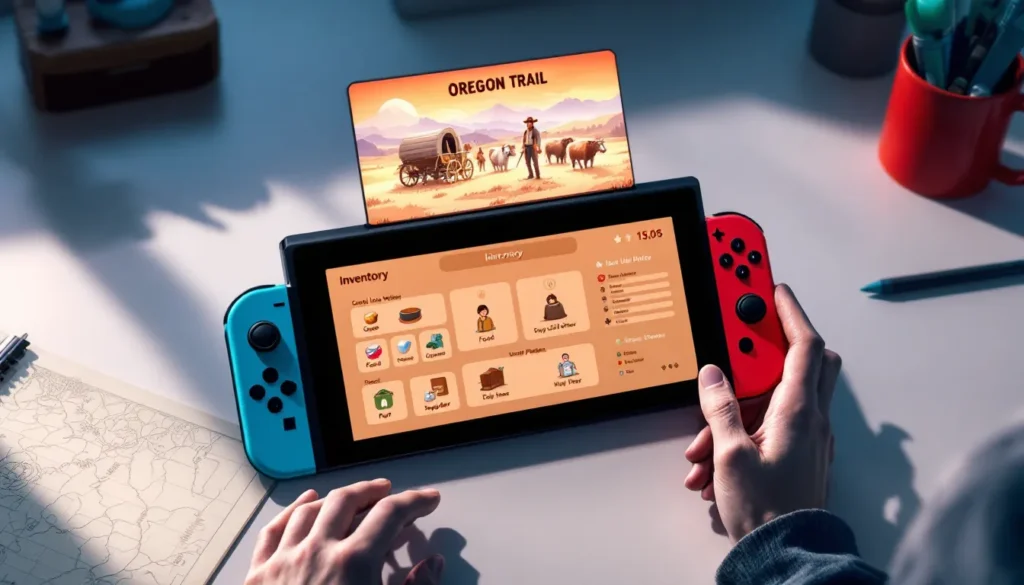
Oregon Trail has made its way to Nintendo Switch, and it’s capturing the same magic that made the original a classroom staple decades ago. Whether you’re rediscovering a childhood favorite or experiencing this iconic game for the first time, the Switch version brings the educational adventure game into the modern era with updated mechanics and portable convenience. This guide walks you through everything you need to know about playing Oregon Trail on Nintendo Switch, from installation and core gameplay to advanced strategies that’ll help you actually survive the journey westward.
Key Takeaways
- Nintendo Switch Oregon Trail honors the classic 1985 educational game while adding modern quality-of-life improvements, controller-friendly navigation, and portable convenience for players across all Switch hardware models.
- Master resource management by prioritizing food purchases over everything else, as starvation is the most common failure point for new players starting their westward journey.
- The game’s branching decision system creates emergent storytelling where consequences ripple throughout your expedition, meaning no two runs play identically and party member deaths are learning opportunities rather than game-ending failures.
- Oregon Trail on Switch remains educationally and culturally relevant by teaching resource management, risk assessment, and decision-making under pressure while respecting the original’s design philosophy of meaningful choice and permanent consequences.
- Success requires balancing speed and safety: track your calendar to ensure 100-120 days for completion, plan fort visits strategically, and use hunting only at ideal locations rather than wasting precious ammunition and time.
- The Switch version works perfectly as a portable experience with handheld and docked flexibility, allowing you to pause expeditions and play in short bursts during commutes or downtime.
What Is Oregon Trail And Why It Matters On Nintendo Switch
The History And Legacy Of Oregon Trail
Oregon Trail isn’t just a game, it’s a cultural phenomenon that shaped how millions of students first engaged with interactive storytelling and historical simulation. Originally developed in 1985 as an educational tool, the game challenged players to guide a wagon party from Missouri to Oregon while managing resources, dealing with illness, and making life-or-death decisions. Its legacy spans four decades, and the Nintendo Switch version honors that heritage while bringing quality-of-life improvements that make it accessible to modern console players.
The original Apple II version became legendary because it was brutally honest: your characters could die from dysentery, supplies ran low, and poor planning meant failure. No participation trophies, no hand-holding. That design philosophy remains intact in the Switch version, which is exactly why longtime fans and newcomers alike find it compelling.
How Oregon Trail Translates To Modern Console Gaming
Bringing a text-heavy, decision-driven PC game to a controller-based console required thoughtful adaptation. The Switch version maintains the text-based storytelling and turn-by-turn progression but streamlines menu navigation for handheld and docked play. The game respects your time, sessions can be quick or lengthy depending on your approach.
The Switch format shines because Oregon Trail works perfectly as a portable experience. You can make decisions during your commute and pick up right where you left off. The game doesn’t demand twitch reflexes or constant input: it’s pure strategy and consequence management. This makes it feel right at home on Nintendo’s hybrid hardware, attracting both classic gamers seeking nostalgia and newer players interested in mechanics-focused, story-driven gameplay.
Getting Started: Installation And Initial Setup
System Requirements And Compatibility
Oregon Trail on Nintendo Switch runs on all Switch hardware models: the original Nintendo Switch, Switch Lite, and Switch OLED. The game requires approximately 2GB of storage space, making it lightweight compared to modern AAA titles. You’ll need an active internet connection for initial download but no Nintendo Switch Online subscription to play the single-player campaign.
The game is available digitally through the Nintendo eShop and physically through select retailers. Digital ownership offers convenience: physical cartridges provide a nice collectors’ item.
Downloading And Installing The Game
To download Oregon Trail on your Switch:
- Navigate to the Nintendo eShop from your home screen.
- Search for “Oregon Trail” in the store’s search bar.
- Select the official game by The Learning Company (the licensed developer).
- Purchase and download, the entire installation typically completes within 5-10 minutes depending on your internet speed.
- Once finished, launch the game from your Switch home screen.
If you’re buying a physical cartridge, insert it into your Switch dock, and the system will prompt automatic installation. Either way, you’ll be ready to start your journey in minutes. The game includes a brief tutorial that walks you through basic mechanics, though experienced players can skip straight into a new expedition.
Core Gameplay Mechanics Explained
Managing Resources And Supplies
Resource management is Oregon Trail’s heartbeat. At the start, you’ll allocate your $1,600 budget across four categories: oxen, food, ammunition, and supplies (clothing, spare parts, medicine). This opening decision shapes your entire run.
Food is your primary resource drain. Your party consumes food daily, and running out means starvation. Most successful runs prioritize buying extra food, it’s the most common failure point for new players. Oxen pull your wagon and determine travel speed: more oxen means faster progress but also higher upkeep costs. Ammunition is used for hunting, which provides supplemental food if you have time to stop.
As you travel, you’ll encounter opportunities to trade with other travelers, buy supplies at forts, and forage for resources. A solid run involves constantly monitoring your inventory and making informed decisions about when to hunt, rest, or push forward even though low supplies. The game doesn’t let you micromanage obsessively, you work with limited information and must adapt as circumstances change.
Health And Survival Systems
Your party members have individual health status that affects the group’s overall condition. Illnesses like cholera, dysentery, and typhoid fever can spread through your party, and injuries from accidents require medical attention. The Switch version displays health bars and condition indicators clearly so you always know your party’s status.
Resting at landmarks restores health and allows injured members to recover. The trade-off: rest costs time, and time is limited. The game tracks the calendar, and you need to reach Oregon by winter before snow makes passage impossible. This creates constant tension between pushing hard and resting when party health is critical. Sometimes the optimal play is stopping at a river ford for a full day of rest, even though it delays your arrival.
Decision Making And Consequences
Oregon Trail thrives on meaningful choice. You’ll face branching decisions: Do you attempt a dangerous river crossing now or take a longer, safer route? Do you trade supplies to help stranded travelers, knowing it reduces your own cushion? Do you risk hunting in an unfamiliar area or stick to safe paths?
The game tracks your decisions and weaves consequences throughout your journey. A poor river crossing choice might injure a party member. Refusing to help others might affect NPC interactions later. These aren’t arbitrary, they shape the narrative and determine your success odds. The beauty is that no single wrong decision is game-ending: you’re always recovering and adapting. This creates the emergent storytelling that made Oregon Trail iconic.
Choosing Your Path: Game Modes And Difficulty Options
Different Routes And Destinations
Oregon Trail offers multiple starting points and destination options, each with distinct difficulty profiles. The classic Missouri-to-Oregon route is the baseline experience, taking roughly 2,000 miles and 6-8 months of in-game time. You can also choose alternative endpoints like Fort Vancouver or the Willamette Valley, which alter the total distance and required supplies.
Different routes pass through varied terrain: prairie, mountains, rivers, deserts. Each presents unique hazards. Mountain passes increase accident risk: desert crossings demand more water and rationed food. Route selection isn’t purely cosmetic, it’s a strategy lever you pull from the game’s start. Experienced players know certain routes are harder on specific resources, so your opening budget allocation should match your chosen path.
Difficulty Settings And Customization
The Switch version includes customizable difficulty options:
- Apprentice Mode reduces harsh events and provides forgiving resource management. Ideal for first-time players or those seeking a relaxed experience.
- Standard Mode presents the classic Oregon Trail experience with realistic mortality rates and supply scarcity. Most players find this the “true” experience.
- Grueling Mode increases random hazards and tightens resource margins. Even veteran players struggle here.
You can also customize specific parameters: party composition (which historical figures join your party), starting resources, and available assistance. These options let you craft a run that matches your skill level and preferred difficulty curve. The game respects player agency, you’re not forced into a one-size-fits-all experience.
Pro Tips And Strategies For Success
Resource Management Best Practices
Prioritize food over everything else. New players invariably fail due to starvation. Buy more food than feels necessary, you’ll thank yourself halfway through.
Hunt strategically. Hunting provides supplemental meat but costs time and ammunition. Stop only at ideal hunting spots (your guide alerts you to good locations). Hunting with low ammunition is wasteful: make your shots count.
Leverage forts. Forts appear at landmarks and sell supplies. Prices are reasonable, and buying fresh supplies at forts beats arriving in Oregon depleted. Plan your spending to reach each fort with budget remaining.
Accept party member deaths as learning, not failure. Your journey doesn’t end if one party member dies, the expedition continues. Treat deaths as feedback about your strategy, not a reset condition. This mental shift prevents the game from feeling punishing and instead feels like genuine risk management.
Track your calendar. The game displays the current date and time remaining. Calculate roughly: you need 100-120 days to complete the journey safely. If it’s August and you’re only halfway there, you’re cutting it close. Adjust your pace accordingly.
Avoiding Common Mistakes And Pitfalls
Don’t waste ammunition. Ammunition is finite and expensive. Only hunt when you’re certain you’ll convert the ammunition into food. Random hunting excursions usually waste resources.
Don’t ignore warning signs. The game warns you about dangerous river crossings, low supplies, and approaching winter. These warnings are earned wisdom, heed them. Ignoring “Winter is Coming” alerts often leads to disaster.
Don’t over-invest in oxen. Most players buy too many oxen. Three to four pairs is usually sufficient. Extra oxen consume food and provide diminishing returns on speed. Spend the savings on food instead.
Don’t neglect party health. Preventative rest is better than reactive healing. If you notice multiple party members getting sick, take a day to rest and recover. Waiting until someone is critical wastes time and resources.
Don’t make large donations unless your supply cushion is massive. Helping stranded travelers is thematic but costly. Unless you’re flush with resources, prioritize your own party’s survival.
Maximizing Replayability And Engagement
Oregon Trail shines across multiple runs because each journey is different. Different routes, difficulty settings, and starting parameters create legitimate variety. After completing your first successful run, try these variations:
- Ironman mode (if available): Complete a run without restarting, accepting all consequences.
- Speed run: Try to reach Oregon in the minimum number of game days.
- Minimalist run: Start with the smallest budget and see if you can still succeed through careful trading and hunting.
- Character-focused runs: Choose specific party members and create narratives around their survival (did Sarah make it? How many children reached Oregon?).
The game’s emergent storytelling means no two runs play identically. This is why Oregon Trail, even though its simplicity, has maintained cultural relevance, each playthrough generates a unique narrative worth sharing.
Oregon Trail On Switch Versus Other Platforms
Performance And Graphics Comparison
The Nintendo Switch version maintains the text-and-illustration aesthetic that defines Oregon Trail. Don’t expect flashy 3D graphics, this is intentional design that honors the original while remaining legible on handheld screens. Performance is solid across all Switch models: gameplay runs smoothly at 30fps, and there are no notable frame drops during intense decision sequences.
Compared to the iOS and Android versions, the Switch iteration feels more polished visually while maintaining identical gameplay systems. The web browser versions (available on some platforms) work but lack the tactile controller feedback and cohesive UI that the Switch provides. If you’ve played Oregon Trail on PC or mobile, the Switch version will feel immediately familiar but with superior presentation.
Graphically, the original 1985 Apple II version is lo-fi by modern standards, pixelated wagons and ASCII art. The Switch version modernizes the look without betraying the aesthetic. You’re getting a respectful homage rather than a complete redesign.
Controls And Handheld Versus Docked Play
Button mapping feels natural on the Switch controller. The interface uses the d-pad and face buttons for menu navigation, making selections quick and responsive. You’re not fighting the control scheme, it feels purpose-built for the Switch. Docked play works smoothly on a TV, and handheld mode is equally comfortable: there’s no advantage to one over the other.
One strength of the Switch version specifically: you can pause and suspend your expedition anytime. Play a few days of travel on your commute, then pick up exactly where you left off at home. This flexibility is massive compared to older versions where progress was session-bound. The portability means Oregon Trail becomes a perfect “play in short bursts” experience, which matches how most Switch owners actually game.
The game supports both Joy-Con pairs and the Pro Controller, though the Joy-Cons are perfectly adequate. There’s no option for touchscreen input in docked mode, but the traditional controller interface is responsive enough that this isn’t a limitation.
Educational Value And Modern Relevance
Why Gamers And Educators Embrace This Classic
Oregon Trail on Nintendo Switch has sparked renewed interest from both educators and adult gamers rediscovering the title. For educators, the game presents historical context (settlement patterns, travel distances, period-accurate challenges) wrapped in engaging mechanics. Students learning about westward expansion benefit from experiencing the logistical and health challenges pioneers faced, dysentery becomes visceral when it kills your character, not just a footnote in a textbook.
For gamers, Oregon Trail represents game design philosophy that modern titles often overlook. There’s no tutorial holding your hand through every decision. Failure is possible and permanent (party members can die and stay dead). Moral choices lack “good” or “bad” labels, you make decisions based on incomplete information and live with consequences. This is pure emergent gameplay, the kind that generates stories worth retelling. You can find discussions across social media where players describe their Oregon Trail runs like actual adventures they lived through.
The game has transcended its educational origins to become a legitimate piece of gaming culture. Its influence appears in modern roguelikes, survival games, and narrative-driven experiences that prize meaningful choice over optimal outcomes. Playing Oregon Trail on Switch connects you to that lineage while appreciating the source material’s elegant design. When you experience party members dying to disease or starvation, you gain perspective on historical hardship that no passive history lesson provides.
Modern relevance? The game teaches resource management, risk assessment, and decision-making under pressure, skills that apply far beyond the Oregon trail simulation. And in an era of busywork-heavy game design, Oregon Trail’s focus on consequence and scarcity feels refreshing. You’re always one bad decision away from disaster, which creates genuine tension throughout the journey. That emotional investment is what keeps players talking about Oregon Trail decades after its release.
Conclusion
Oregon Trail on Nintendo Switch delivers the classic experience modern gamers deserve: accessible yet challenging, simple in presentation but deep in strategy. Whether you’re experiencing the game for the first time or returning to a childhood favorite, the Switch version respects both the original’s design philosophy and modern convenience standards.
Start with Standard Mode on the classic Missouri-to-Oregon route, prioritize food in your budget allocation, and remember that party member deaths aren’t failures, they’re learning moments that inform your next run. The game rewards careful planning, adaptability, and accepting that sometimes you’ll lose even though your best efforts.
Your journey westward awaits. Stock your supplies, crack the reins, and good luck, you’re going to need it.