The Nintendo Switch Legend of Zelda Edition is more than just a console, it’s a love letter to one of gaming‘s most storied franchises. Released to commemorate the legacy of The Legend of Zelda, this special hardware variant combines gorgeous design elements inspired by Hyrule with the full functionality of a standard Switch. If you’re wondering whether this collector’s piece is worth the premium, or if you’re curious about what separates it from the regular model, you’re in the right place. This guide breaks down everything from design details to performance specs, so you can make an well-informed choice about whether this edition belongs in your gaming collection.
Key Takeaways
- The Nintendo Switch Legend of Zelda Edition features identical hardware, processing power, and performance to standard Switch models—you’re paying for exclusive design and collector’s appeal, not superior functionality.
- The custom Zelda Edition design includes gold-accented chassis, embossed Master Sword and Triforce imagery, and themed Joy-Cons, but these aesthetic touches are purely visual with no impact on gameplay or performance.
- Games like Tears of the Kingdom are not included with the Nintendo Switch Legend of Zelda Edition; you’ll need to purchase software separately regardless of regional variants.
- The console originally launched at $299.99 USD (matching standard Switch pricing), but secondhand market values have fluctuated between $350–$450 for pristine boxed units due to limited availability and collector demand.
- Collectors should prioritize mint-condition, boxed units for long-term value retention, as loose units or those with cosmetic wear depreciate faster because buyers specifically seek pristine condition for display.
- The Zelda Edition is worth buying only if you’re a dedicated franchise fan or serious Nintendo collector—budget-conscious players should choose the standard Switch, and those prioritizing display quality should consider the Switch OLED instead.
What Is The Nintendo Switch Legend of Zelda Edition?
The Nintendo Switch Legend of Zelda Edition is a themed variant of Nintendo’s hybrid console, designed to celebrate the iconic adventure series. Unlike standard Switch models, this edition features custom artwork, unique color schemes, and special branding elements inspired by The Legend of Zelda: Tears of the Kingdom and the broader Zelda universe.
This isn’t a different console in terms of hardware, it runs the same OS, processes games at identical speeds, and supports every game the regular Switch does. What makes it special is purely aesthetic. The edition appeals to three main audiences: hardcore Zelda fans wanting a show-piece console, collectors seeking limited-edition Nintendo products, and players who want their gaming hardware to reflect their favorite franchise.
Launched as a limited-release product, availability has been sporadic, making it harder to find compared to standard Switch models. Supply constraints and regional releases have influenced its value on the secondhand market significantly.
Design and Aesthetic Details
Console Exterior and Color Scheme
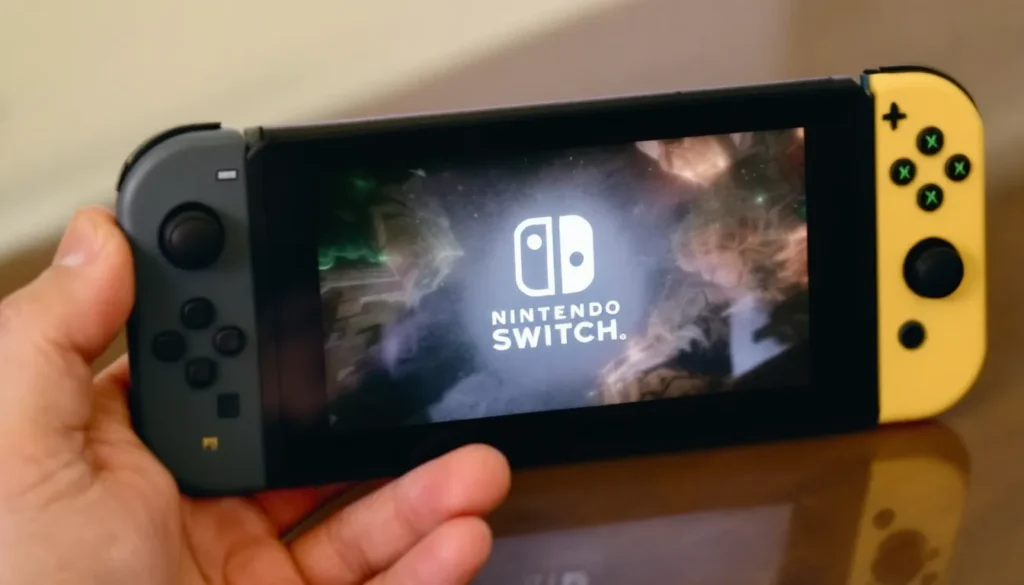
The console body showcases a custom color treatment that draws directly from Zelda iconography. The Joy-Con controllers and main chassis feature a gold-accented design paired with dark charcoal or navy coloring, evoking the royal aesthetic of Hyrule’s kingdom. The back of the console displays embossed details, typically the Master Sword silhouette, the Triforce symbol, or other recognizable Zelda imagery.
Unlike the standard white or black Switch models, the Zelda Edition’s coloring is more muted and sophisticated. The metallic gold accents catch light distinctly, making this console stand out on a shelf. The overall finish is durable, though like any console with lighter colors, it shows dust and fingerprints more readily than darker variants.
Joy-Con Customization and Special Branding
Both Joy-Con controllers receive the custom treatment. They’re not just differently colored, they feature embossed patterns or printed artwork that ties into Zelda lore. The buttons maintain standard responsiveness and functionality, but the visual presentation is distinctly thematic. Some editions feature matching color schemes on both controllers, while others use complementary Zelda-inspired hues.
The attachment rails and all mechanical components function identically to standard Joy-Cons. There’s no performance difference: this is purely visual customization. For players concerned about Joy-Con drift (a notorious issue on older units), the Zelda Edition uses the same hardware and is subject to the same potential issues.
Dock and Accessories Styling
The dock that ships with the Zelda Edition receives custom artwork or color treatment matching the console. Some regional variants include printed Zelda scenes or the Triforce on the dock’s front panel. The back still has all standard ports, USB-C, HDMI, and power input, so docking functionality remains unchanged.
Accessories included with the Edition (like the Joy-Con grip or dock) are also themed, though they function identically to standard Switch accessories. The only true difference is visual presentation. Players can still use third-party or standard Nintendo docks and accessories without any compatibility issues.
Included Games and Content
What Comes in the Box
The Nintendo Switch Legend of Zelda Edition includes the console, both Joy-Cons, the dock, the AC adapter, and an HDMI cable, the standard Switch bundle. Some regional releases also include the Joy-Con grip for comfort during extended play sessions.
Critically, the edition does not automatically include any games. Many buyers assume The Legend of Zelda: Breath of the Wild or Tears of the Kingdom come pre-loaded, but they don’t. You’ll need to purchase games separately or download them from the eShop. This is an important distinction because the special design alone doesn’t offset the cost of buying software.
Some regional bundles (particularly in Japan and select markets) have included Tears of the Kingdom as part of a premium package deal, but this varies by region and retailer. Always check the specific bundle contents before purchasing.
Exclusive Digital Content and DLC
The Zelda Edition doesn’t unlock exclusive DLC or in-game content that’s unavailable on standard Switch models. All Zelda games and their DLC are accessible through the eShop regardless of which Switch variant you own.
What you do get is thematic value, playing Tears of the Kingdom or Breath of the Wild on a console designed specifically to celebrate those games feels meaningful to collectors and franchise fans. Some players appreciate the cohesion of playing their favorite series on hardware that reflects it, even if there’s no mechanical gameplay advantage.
Performance and Technical Specifications
Hardware and Processing Power
The Zelda Edition runs on identical hardware to every other Switch model released after 2019. It uses an NVIDIA Tegra processor (custom-built for Nintendo), with 4GB of RAM and 32GB of internal storage. Processing power is exactly the same whether you buy the Zelda Edition, the standard model, or the Nintendo Switch Lite.
Docking behavior, portable performance, and TV-connected gameplay are all unchanged. If you’ve played a Switch before, you know exactly what to expect performance-wise. The custom design has zero impact on frame rates, load times, or system stability. Experience COD on Nintendo runs at the same performance level regardless of console variant.
Display and Graphics Capabilities
The screen remains a 6.2-inch LCD display with 1280 × 720 resolution in handheld mode and 1920 × 1080 in docked mode. Color output, brightness, and refresh rates are identical to standard Switch models. The display itself isn’t improved or diminished by the custom exterior design.
Graphics rendering, shader performance, and game optimization are untouched. AAA titles like Tears of the Kingdom run at the same visual quality and frame rate on this Edition as on any other Switch. The Zelda-themed exterior is purely cosmetic, don’t expect enhanced graphics or performance simply because you’re playing on a Zelda-branded console.
Pricing and Availability
Launch Price and Current Market Value
The Nintendo Switch Legend of Zelda Edition typically launched at $299.99 USD, identical to the standard Switch MSRP. This pricing reflects the fact that you’re not paying for superior hardware: you’re paying for exclusive design and collector’s appeal.
Since release, market value has fluctuated significantly based on availability. Limited stock and regional scarcity have driven secondhand prices higher in some markets, with some units selling for $350–$450 on resale platforms. Conversely, in regions where stock was plentiful, prices have remained closer to MSRP or even dropped below retail for used units.
Current pricing in 2026 depends heavily on condition, region, and market demand. A pristine, boxed unit commands premiums, while loose consoles without original packaging sell at discounts. Check current listings on eBay, Facebook Marketplace, or local gaming stores for real-time pricing in your area.
Where to Purchase and Regional Availability
Official retail availability for the Zelda Edition has become sporadic. Nintendo occasionally restocks through their official store and select retailers like GameStop, Target, and Best Buy, but supplies dry up quickly. Unlock Savings: Why Buying discusses secondhand options that may be relevant if new stock is unavailable.
Regionally, Japan and Europe received dedicated releases that differ slightly in design from North American variants. Japanese units feature different artwork and color timing compared to US models. If you’re hunting for a specific regional variant, import costs and shipping should factor into your purchase decision.
Secondhand markets (eBay, Mercari, local classifieds) remain your most reliable source for finding units at current market rates. Verify seller ratings, check for signs of drift or screen damage, and confirm that all original components are included before committing to a purchase.
Is It Worth Buying in 2026?
Target Audience and Ideal Buyers
The Zelda Edition makes sense for three specific buyer categories:
Hardcore Zelda Collectors who want every major console variant and piece of official Nintendo hardware. If you’re building a comprehensive Zelda museum, skipping this console means an incomplete collection.
Casual Players Who Love Zelda and want their console to reflect their favorite franchise. The thematic value alone, playing Tears of the Kingdom on Zelda-branded hardware, justifies the purchase for players who appreciate that cohesion.
Players Seeking Limited-Edition Prestige where rarity adds value. If you like owning exclusives that others don’t have, the Zelda Edition’s limited availability makes it appealing as a status piece on your shelf.
Budget-conscious players should skip this. The standard Switch costs less, performs identically, and doesn’t carry collector markup. If you’re purely after functionality, the design premium isn’t justified.
Collector’s Value and Investment Potential
Like all limited-edition gaming hardware, the Zelda Edition holds collector’s value, but not as an investment that appreciates reliably. Nintendo collectibles fluctuate based on nostalgia cycles, franchise popularity, and supply dynamics.
A mint-condition, boxed unit will likely hold its MSRP value or appreciate modestly over 5–10 years. But, loose units or ones with cosmetic wear depreciate faster than standard Switch models because buyers specifically seek the pristine condition for display purposes. If you’re buying this as an investment expecting rapid appreciation, temper expectations, collectible consoles appreciate slowly and unpredictably.
The real value is personal. If you love Zelda and enjoy having themed hardware, the depreciation matters less because you’re getting daily enjoyment. If you’re purely speculating, standard Switch models are better long-term bets because they’re more fungible and easier to resell.
Comparing to Standard Switch Models
The standard Switch, Nintendo Switch OLED, and Nintendo Switch Lite each have distinct advantages:
Standard Switch: Cheapest new option (~$299), identical performance to the Zelda Edition, no design premium. Best choice if you want functionality without paying for aesthetics.
Switch OLED: Superior 7-inch OLED display, better colors, higher price (~$349). Better for portable play due to the enhanced screen, but costlier than both the Zelda Edition and standard Switch.
Switch Lite: Ultra-portable, $199, no TV docking. For handheld-only players, this is the cheapest entry point. No Zelda Edition variant exists for the Lite.
The Zelda Edition costs the same as the standard Switch but offers less functionality since you’re not getting a performance or display upgrade. You’re strictly paying for design. If display quality matters more to you than Zelda theming, the Switch OLED is arguably the better $50 premium. Discover the Nintendo Switch represents another themed bundle option worth comparing if you’re exploring special editions.
Common Questions and Troubleshooting
Durability and Longevity Concerns
The custom paint or coating on the Zelda Edition’s exterior is durable but not immune to wear. Regular handling, bag storage, and direct sunlight can cause the metallic gold accents to fade or the custom colors to show patina over years of use. This is normal for any custom-finished console and isn’t unique to the Zelda Edition, all colored Switch models experience similar cosmetic aging.
Joy-Con drift, a widespread issue affecting all Switch models, affects the Zelda Edition equally. The custom coloring doesn’t prevent this hardware fault. Nintendo’s warranty covers drift repairs on newer units, but costs vary by region and may not apply to secondhand purchases. If you’re buying a used Zelda Edition, testing Joy-Con responsiveness before purchasing is essential.
The internal components, processor, RAM, storage, are identical to standard units. No unexpected longevity issues are associated with the Zelda Edition specifically. Many original Switch units from 2017 still function perfectly in 2026, suggesting the Zelda Edition should enjoy similar lifespan if treated with basic care.
Software Updates and Future Support
The Zelda Edition receives identical system updates to all Switch models. Nintendo’s OS updates roll out simultaneously across every Switch variant, ensuring that the Zelda Edition never falls behind on features, security patches, or compatibility improvements. Nintendo Switch Archives – Noonaofficiel regularly covers system updates and their impact across all Switch models.
Game support also mirrors standard Switch coverage. All future Nintendo releases and eShop content remain accessible on the Zelda Edition with zero restrictions. If Zelda is your primary concern, both Breath of the Wild and Tears of the Kingdom are not leaving the eShop, and new Zelda announcements would presumably support all Switch variants equally.
The only potential longevity question involves Nintendo’s eventual discontinuation of the eShop for older Switch units (similar to how the 3DS eShop shut down). This is a fleet-wide issue, not unique to the Zelda Edition. Your custom console will age at the same rate as any other Switch in terms of software support.
Conclusion
The Nintendo Switch Legend of Zelda Edition is a beautifully crafted piece of gaming hardware that delivers exactly what it promises: a stylish, Zelda-themed console with zero performance compromises. It’s not better than a standard Switch, it’s simply different, and that difference comes with a collector’s premium.
Buy it if you’re a dedicated Zelda fan who appreciates owning hardware that reflects your passion, or if you’re building a comprehensive Nintendo collection. Skip it if you’re budget-conscious, prioritize display quality over aesthetics, or just want to play Tears of the Kingdom without paying design markup.
The console will remain functional and supported for years to come, making it a solid long-term purchase for collectors. Just understand that you’re paying for visual appeal and limited-edition status, not superior performance. In 2026, with supply remaining limited and secondhand prices stabilized, now is a reasonable time to grab one if you’ve been waiting, but only if the Zelda theming genuinely matters to you. Nintendo Life and other dedicated Nintendo communities remain excellent resources for tracking restocks and discussing collector’s value if you need additional insights. Whether you grab the Zelda Edition or stick with a standard model, you’re getting into a robust library of incredible games either way.